
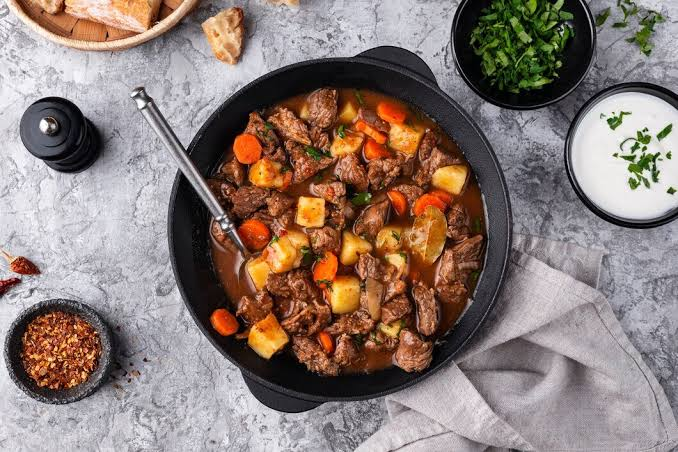
A traditional Hungarian soup that has become part of Maramures’ culinary heritage thanks to Mrs. Picu Iulia, 31 years old, from Sighetu Marmatiei. Gulyasleves, also known as Hungarian goulash, is a hearty and aromatic dish, perfect for cold winter days.
🥩 The Authentic Ingredients of Hungarian Goulash
Gulyasleves is made with veal (or beef) cut into cubes, onions, garlic, potatoes, carrots, bell peppers, parsnips, and celery root. The secret of its unmistakable flavor lies in sweet Hungarian paprika, ground caraway seeds, and bay leaves. Unlike other soups, goulash is not thickened with flour or sour cream — its texture comes from the vegetables and potatoes that slowly break down during the long simmering process.
The veal is sautéed with onions until golden, then paprika and caraway are added, taking care not to burn them (paprika caramelizes very quickly in hot fat). After a few minutes, water or beef broth is added, and the soup is left to simmer on low heat for at least two hours, until the meat is tender.
🍲 Goulash — From Hungarian Herdsmen to Maramures Kitchens
The word “gulyás” means “cattle herder” in Hungarian, and the dish originates from the simple campfire cooking of herdsmen who prepared their meat in a cauldron (bogrács) suspended over an open fire. Over the centuries, goulash evolved from a humble camp dish into a national Hungarian staple, recognized worldwide.
In Transylvania and Maramures, goulash was adopted and adapted by local communities, while preserving the essential elements: plenty of paprika, tender meat, and seasonal vegetables. Mrs. Picu Iulia’s recipe from Sighetu Marmatiei preserves this authentic tradition, with influences specific to the Maramures region.
🥟 How Gulyasleves Is Served
Goulash is usually served in deep bowls, with plenty of broth and vegetables, sprinkled with fresh chopped parsley. Optionally, small dumplings (csipetke) made from flour, egg, and salt are added and boiled directly in the soup. At the table, it is served with hot peppers or Erős Pista (hot pepper paste) for those who prefer a spicier taste.
Fresh bread or polenta (mămăligă) are the perfect accompaniment for this hearty dish. A glass of dry red wine completes the culinary experience. In Maramures, goulash is often cooked in a cauldron outdoors at community events and celebrations, keeping alive the shepherds’ tradition of this dish.
🔍 What’s next: We will continue the series of traditional recipes with unique dishes from the culinary heritage of the Maramures Museum. Stay on maramurespesurse.ro for gastronomic stories from the heart of Maramures!
Recipe source: Picu Iulia, 31 years old, Sighetu Marmatiei — Collection of the Maramures Museum Sighetu Marmatiei / GastroEtnoArt. We are the only 100% independent newspaper with no public funding. Give us a like, share and follow!